


Lifestyle
What is homologation?

Apr
🏍️ Everything you need to know about motorcycle homologations: understanding the AAA, AA, A, B and C labels
When discussing approved motorcycle clothing, classes are often mentioned. AAA, AA, A, B or C. But what do these letters really mean? What are they used for? And how do you choose the right equipment for your practice? We'll explain it all simply.
🔒 What is homologation?
A approval certifies that a motorcycle garment meets the following European safety standards. These tests are carried out by independent bodies (such as Alienor Certification) according to the standard. EN 17092.
This standard measures the abrasion resistance, to the tear, to the strength of the seams and the presence of protective measures (elbows, shoulders, back…).
👉 In short: an approved garment guarantees that it has been tested to protect you effectively in case of a fall.
🏁 The 5 levels of certification
The standard EN17092 classifies motorcycle clothing by 5 categories depending on their level of protection.
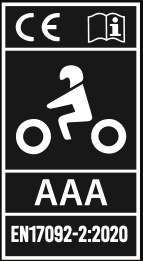
🥇 Class AAA — The most protective
-
EN17092-2 Standard
-
Tested to withstand the most extreme conditions.
-
Designed for sport bikers or long-distance riders.
-
Highly resistant materials, often more rigid or heavier.
💡 Ideal for track use or high-speed driving.
🥈 Class AA — The right balance
-
EN17092-3 Standard
-
An excellent compromise between safety and comfort.
-
High protection against impacts and abrasion, but more comfortable to wear every day.
💡 Perfect for daily commutes and long rides.
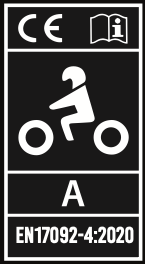
🥉 Class A — Urban protection
-
EN17092-4 Standard
-
Lighter level of protection, but still effective.
-
Softer, more breathable and comfortable fabrics.
💡 Designed for urban motorcyclists and riding in hot weather.
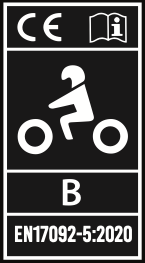
🧥 Class B — Abrasion resistance only
-
EN17092-5 Standard
-
Protects against abrasion, but without protective cases.
💡 To be worn with separate protective gear (vest, back protector, etc.).
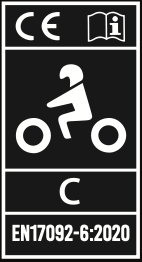
🛡️ Class C — Protections only
-
EN17092-6 Standard
-
Corresponds to protective gear (knee pads, elbow pads, etc.) sold separately.
💡 Often used in conjunction with non-approved clothing.
⚙️ Why is this important?
Motorcycle clothing, however stylish, is useless if it doesn't protect you. In the event of a fall, the abrasion from the asphalt can... ripping jeans in 0.3 seconds.
The certification tests guarantee that your equipment will withstand several seconds, depending on its class, to let you time to slide without serious injury.
👕 Choose your equipment wisely
Some advice before buying:
-
Always try on your garment in driving position (arms bent, back curved).
-
Check that the CE markings (EN1621-1 or EN1621-2) are in place.
-
Avoid clothes that are too tight or too loose: the protection must stay in place in case of a fall.
-
Replace your equipment after an accident, even if it appears undamaged.
🌡️ And what about comfort in all of this?
The higher the level of protection, the thicker and more rigid the materials.
👉 That's why brands offer different levels depending on the intended use:
-
AAA / AA for maximum safety
-
A / B / C for comfort and lightness
It's up to you to find the right balance according to your practice.
🧩 In summary
| Class | Protection | Recommended use |
|---|---|---|
| AAA | Very high | Track / Long journeys |
| AA | High | Route / Daily |
| HAS | Average | City / Summer |
| B | Abrasion alone | technical underwear |
| C | Protections only | technical underwear |
💬 In conclusion
Choosing approved equipment means drive more serenely.
You can't eliminate all risks, but you can seriously limit the damage.
Note that wearing an approved jacket or trousers is not mandatory for motorcycling. Only a helmet and gloves are required.